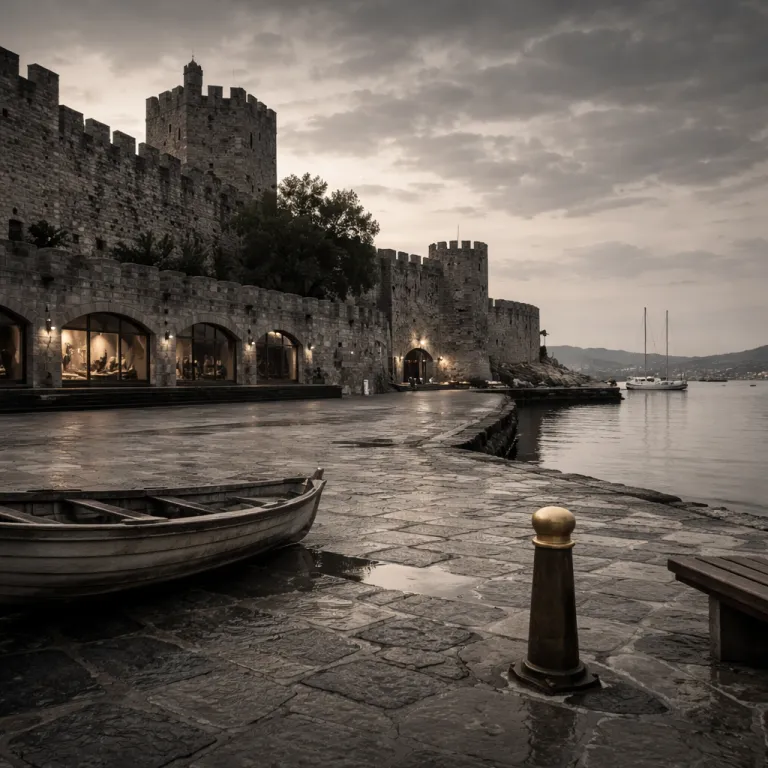
Why a Bodrum Castle museum visit belongs in every luxury itinerary
A Bodrum Castle museum visit anchors any serious cultural stay in the city. The fortress that locals call Bodrum Castle or Castle of St. Peter rises above the harbour, its stone walls and every tower reflecting both medieval ambition and Aegean light. For travelers booking premium rooms along the bay, this museum of underwater archaeology is one of the best things to balance beach clubs with depth.
The Knights Hospitaller built the castle in the 15th century, and today the Turkish authorities curate one of the world’s leading collections of underwater archaeology inside its halls. Officially, “What is Bodrum Castle? A 15th-century fortress housing the Museum of Underwater Archaeology.”, and that concise description barely hints at the shipwreck galleries, the ancient objects and the quiet castle grounds that reward unhurried visits. A Bodrum museum visit here connects the medieval coats of arms carved into the walls with the late Bronze Age cargo raised from the seabed.
Luxury travelers often ask whether a Bodrum Castle museum visit is worth carving out several hours from a short stay. The answer is yes, especially if you pair the museum underwater collections with a walk through the ancient city remains and the harbourfront cafés afterward. Think of it as one of the best things in Bodrum for understanding why this Turkish port evolved from a Carian outpost into a yachting hub.
Timing your Bodrum Castle museum visit for light, calm and comfort
Arrive early if you want the castle grounds almost to yourself. The official hours currently run from 08:30 to 19:00 for daytime and 19:00 to 22:00 for night visits, and those first and last hours frame the stone of Bodrum Castle in soft light that flatters both photography and mood. With cruise passengers now streaming into Bodrum, a carefully timed museum visit is the difference between contemplative archaeology and a rushed shuffle.
Morning brings angled light on every tower and bastion of Peter Castle, with the harbour and the ancient city amphitheatre glowing below. Late afternoon, shadows lengthen across Castle Peter and the Italian Tower, and the glass cases inside the museum halls feel cooler and quieter. Night openings, a recent innovation, turn a Bodrum Castle museum visit into an atmospheric stroll where underwater artifacts and medieval coats of arms emerge from the dark.
For a culture focused luxury stay, plan two to three hours inside the Bodrum museum, then another hour for the walk up to the Greco Roman amphitheatre. Those hours allow time for the Carian Princess Hall, the Glass Wreck Hall and the outer castle grounds without rushing past key shipwreck exhibits. If you are structuring a longer cultural circuit that includes the Mausoleum of Halicarnassus, pair this castle visit with a refined hotel near the ruins and use a curated guide to luxury stays for cultured travelers as your planning reference.
Inside the halls: shipwrecks, glass and the Carian Princess
The heart of any Bodrum Castle museum visit lies in the shipwreck galleries. The Uluburun shipwreck, raised from the seabed off the Turkish coast, dates to the late Bronze Age and roughly the 14th century BCE, and its cargo of bronze tools, luxury objects and amphorae rewrote what we know about Mediterranean trade. Nearby, the Yassiada shipwreck and the Byzantine ship galleries trace how hulls, cargo and maritime risk evolved from the Bronze Age to the medieval centuries.
Do not rush the Glass Wreck Hall, where the so called glass wreck reveals thousands of glass vessels and other artifacts from a later century BCE trading ship. Here, underwater archaeology becomes tangible, as you stand between cases of translucent glass and amphorae that once lay in total darkness. This is where the phrase museum underwater feels literal, and where the Bodrum museum justifies its reputation among underwater archaeology specialists.
Another room many visitors miss is the Carian Princess Hall, which holds the sarcophagus and gold jewelry of a noblewoman from the 4th century BCE. The objects are displayed with a restraint that suits luxury travelers used to quiet galleries rather than crowds, and the story of this Carian Princess links the ancient city beneath modern Bodrum to the castle above. When you step back outside, the contrast between the cool halls and the sunlit castle grounds reinforces how a single ship, a single wreck or a single tomb can illuminate an entire century.
From castle walls to harbour cafés: a cultural half day route
Think of your Bodrum Castle museum visit as the starting point for a half day cultural loop through the city. Begin at the main gate, pass the coats of arms carved by the Knights Hospitaller, then climb toward the Italian Tower for views across the harbour and the anchored ship traffic. From here, you can trace a line from ancient shipwreck to modern gulet as easily as from medieval stone to whitewashed hotels.
After exploring the underwater archaeology halls, step down through the castle grounds toward the small Turkish bath remains and the chapel spaces that dot the interior. Exit onto Kale Caddesi and follow the waterfront, where the living museum of Bodrum’s shipyards and day cruise boats echoes the cargo once carried by the Uluburun ship and the Yassiada shipwreck. This walk keeps you close to the sea, and every modern ship you pass feels like a descendant of those ancient wreck stories.
From the harbour, continue uphill about 1 kilometre to the Greco Roman amphitheatre, one of the best things in Bodrum for sunset views over the bay. The route links the ancient city grid, the medieval castle and the contemporary marina in a single narrative that suits independent travelers who prefer walking to tour buses. If you are choosing where to stay, this loop also reveals which luxury properties genuinely connect you to heritage rather than isolating you behind gates, a topic explored in depth in this analysis of Bodrum’s occupancy challenge and booking opportunities.
Pairing luxury stays with culture: practical tips for hotel guests
For travelers booking high end rooms in Bodrum, the key is aligning your Bodrum Castle museum visit with your hotel’s rhythm. Choose a property within 2 to 3 kilometres of Castle Peter if you want to walk to the museum in the cool morning hours, then return for a late Turkish breakfast on the terrace. Guests staying farther along the peninsula can ask concierges to arrange private transfers that drop you at the castle gate right at opening hours.
Wear comfortable shoes, because the castle grounds involve uneven stone, staircases and towers, and plan your hours so you are inside the museum underwater halls during the midday heat. Self guided visits work well thanks to clear informational plaques and audio guides, while guided tours with licensed archaeology focused guides add context on each ship, wreck and hall. Families or solo travelers with a strong interest in underwater archaeology should allow extra time for the Uluburun shipwreck and the Byzantine ship sections, which can be dense with artifacts and technical detail.
After your visit, choose a harbour café where glass fronted windows frame both the castle and the ship traffic, and let the experience settle before heading back to your hotel spa or Turkish bath. Many luxury properties will happily coordinate timed tickets, private guides and even after hours experiences when available, so mention your interest in Bodrum museum visits when booking. In a city where things in Bodrum often revolve around the beach, anchoring your stay around culture and archaeology quietly elevates the entire trip.
FAQ about planning a Bodrum Castle museum visit
What can I see during a Bodrum Castle museum visit ?
You will see medieval castle architecture, halls dedicated to underwater archaeology and extensive shipwreck collections. Highlights include the Uluburun shipwreck from the late Bronze Age, the Glass Wreck Hall, the Carian Princess Hall and displays of amphorae, glass vessels and other artifacts from several centuries BCE. The experience combines the story of the ancient city and its maritime trade with the later history of Castle of St. Peter.
How long should I plan for the museum and castle grounds ?
Most luxury travelers should plan at least two to three hours for the castle grounds and main museum halls. If you are particularly interested in underwater archaeology, the Uluburun ship, the Yassiada shipwreck and the Byzantine ship sections can easily extend your visit to four hours. Add extra time if you want to climb every tower, linger over the coats of arms or photograph the harbour from multiple viewpoints.
Are guided tours available at Bodrum Castle and the museum ?
Yes, guided tours are available and work well for visitors who want structured context on each shipwreck and hall. The official information confirms that “Are guided tours available? Yes, guided tours are offered for visitors.”, and many local cultural organizations also arrange private guides with archaeology backgrounds. Self guided visits remain easy thanks to clear signage and audio guides in multiple languages.
Is the Bodrum Museum of Underwater Archaeology suitable for children ?
The museum is considered family friendly, with dramatic shipwreck reconstructions and visually engaging objects like amphorae and glass vessels. Children often enjoy climbing the castle towers and exploring the open air castle grounds between hall visits. Sensitive exhibits, such as the Carian Princess Hall, are presented respectfully and can be approached according to each family’s preferences.
What are the current opening hours and best times to visit ?
The published hours are 08:30 to 19:00 for daytime visits and 19:00 to 22:00 for night openings, though you should always verify locally before you go. Early morning and late afternoon are usually the most comfortable times, with softer light on the stone and fewer crowds from cruise ships. Night visits offer a different atmosphere, with illuminated walls and quieter museum halls that suit guests staying in nearby luxury hotels.