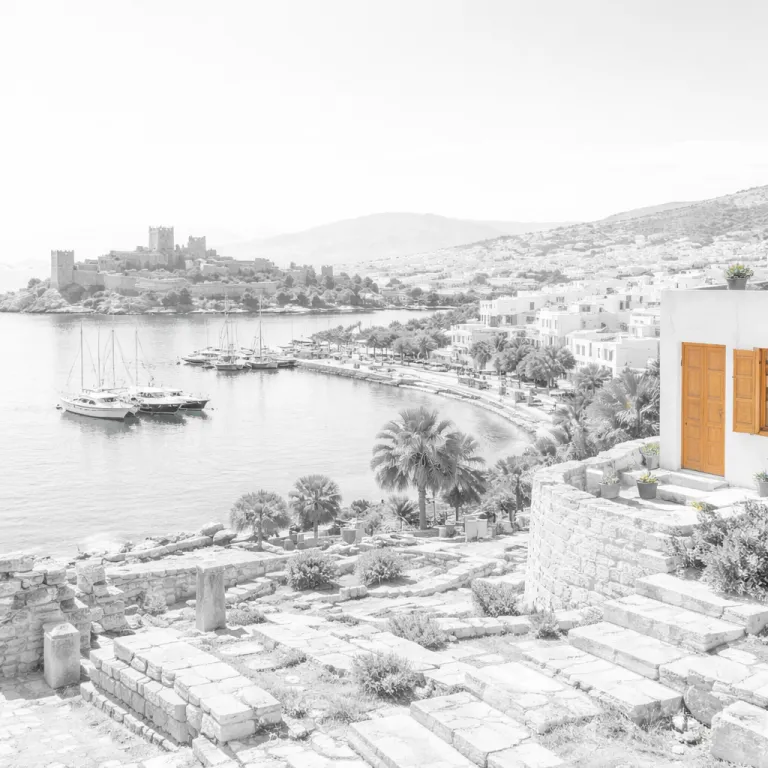
Bodrum heritage tourism at a tipping point
Bodrum heritage tourism sits on a fault line between ancient city and modern resort. The former Greek settlement of Halicarnassus, once capital of Caria in western Turkey, now shares its shoreline with glass fronted suites, rooftop pools and marinas filled with superyachts. For luxury travelers flying into Milas Bodrum Airport, the question is no longer whether the city has five star rooms, but whether its history will still feel tangible when they arrive.
The foundations of Bodrum heritage tourism are literal as well as metaphorical. Beneath the pavements of this Turkish port lie the stones of the ancient city of Halicarnassus, the Roman era street grid and fragments from the Byzantine era, all layered under contemporary villas and hotels. Every new project that is built on the Bodrum peninsula, from Yalıkavak to Torba, must now negotiate with archaeology, zoning laws and a coastline already under pressure from cruise ships and coastal roads.
Local authorities understand that heritage is not a decorative extra for the city, but a core asset that underpins premium pricing and long term appeal. Bodrum Municipality works with the Ministry of Culture and Tourism, local NGOs and academic partners to align urban planning with conservation, using zoning regulations and restoration funding to steer development. For travelers choosing between luxury properties in Turkey, the destinations that protect their history, from Bodrum to Kos across the Aegean Sea, are the ones that retain both character and long term value.
The Mausoleum of Halicarnassus, once one of the wonders of the ancient world, is the most striking example of this tension. The mausoleum site, dedicated to King Mausolus of Caria in the fourth century BCE, now sits in a quiet residential pocket of the city, hemmed in by low rise apartments and small hotels. As Bodrum heritage tourism accelerates, the challenge is to keep this mausoleum and its story legible, rather than allowing it to become an afterthought between beach clubs and shopping malls.
Luxury travelers often arrive with a curated list of restaurants and beach clubs, but the real premium lies in proximity to history. A suite with a view of Bodrum Castle or the Roman amphitheatre connects you directly to ancient times, in a way that no generic seafront strip can match. The business case is clear ; heritage rich districts command higher nightly rates, longer stays and a more resilient demand profile, especially among business leisure guests extending trips beyond meetings.
For those planning a stay, the key is to read the map of Bodrum heritage tourism as carefully as the hotel brochure. Properties near the amphitheatre, the mausoleum site or the old harbour offer walking access to the city’s layered history, from the Greek foundations of Halicarnassus to the Ottoman era shipyards. Choosing these addresses signals to both hoteliers and planners that cultural proximity matters as much as private pools and butler service.
Castles, museums and an amphitheatre under pressure
Nowhere illustrates the stakes of Bodrum heritage tourism more clearly than Bodrum Castle, the fortress that dominates the harbour. Built in the fifteenth century by the Knights Hospitaller, this castle, also known as Castle of Saint Peter or Castle Peter, was literally constructed from stones quarried out of the ruined Mausoleum of Halicarnassus. Today, the same walls house the Bodrum Museum of Underwater Archaeology, one of Turkey’s most important museum collections and a cornerstone of the city’s cultural identity.
The museum inside Bodrum Castle holds shipwrecks and artefacts raised from the Aegean Sea, making underwater archaeology visible to visitors who may never dive. This museum of underwater heritage, sometimes referred to as the museum of underwater archaeology or simply museum Bodrum, anchors the narrative that Bodrum is more than a sun and sea resort. Yet the castle’s stone terraces now share the skyline with new hotels and cruise ships, and the flow of daily tour groups can feel relentless in peak season.
For travelers who value depth over volume, timing and access are everything. Booking a hotel within walking distance of Bodrum Castle allows you to visit early or late, when the light is soft and the crowds thin, and to experience the museum underwater galleries with the calm they deserve. Our detailed guide to visiting the Bodrum Castle museum after hours, available on stay in Bodrum, explains how to plan a visit to the Museum of Underwater Archaeology beyond the crowds and why this should sit at the heart of any Bodrum heritage tourism itinerary.
Just uphill, the Greco Roman amphitheatre of the ancient city of Halicarnassus offers a different kind of tension. This fourth century BCE structure, with around thirteen thousand seats carved into the hillside, is one of the best preserved in Turkey and still hosts concerts and events. The view sweeps across the modern city to Bodrum Castle and the Bodrum peninsula, a panorama that luxury hotels now market heavily in their room descriptions.
Conservationists worry about the impact of amplified sound, lighting rigs and heavy footfall on the amphitheatre’s ancient stone. Heritage authorities from the Ministry of Culture and Tourism have introduced capacity limits and event guidelines, trying to balance living culture with preservation. For guests, the most responsible choice is to attend smaller scale performances, avoid standing on fragile seating tiers and support hotels that actively communicate these conservation rules rather than treating the site as a private backdrop.
Elsewhere, the Myndos Gate, a surviving section of the ancient city walls of Halicarnassus, sits uncomfortably close to modern roads and construction sites. This gate once faced Kos and the wider Aegean Sea, part of the defensive system that protected the city in ancient times and later during the Byzantine era and Ottoman Empire. Today, thoughtful urban planning by Bodrum Municipality, backed by zoning laws and heritage conservation projects, is trying to keep new developments at a respectful distance, but the pressure from land values and hotel demand remains intense.
Mausoleum, Myndos Gate and the business case for preservation
For a luxury traveler, the Mausoleum of Halicarnassus can be a surprisingly understated experience. The mausoleum site is modest in scale, a quiet archaeological park where foundations and scattered blocks hint at one of the great wonders of the ancient world rather than reconstructing it. Yet this understatement is precisely what makes it powerful, especially when contrasted with the scale of nearby hotels and the constant flow of traffic through the modern city.
The story of King Mausolus, his Carian kingdom and the mausoleum that gave its name to every later mausoleum, is central to Bodrum heritage tourism. Standing among the stones, you can trace the outlines of an ancient city that once rivalled other Greek and Roman centres around the Aegean Sea, from Kos to Rhodes. The fact that Bodrum Castle was partly built from these same blocks, repurposed by the Knights Hospitaller in the fifteenth century, underlines how each century has layered its own priorities onto this Turkish harbour.
From a business perspective, the mausoleum and Myndos Gate are not just cultural obligations, they are pricing power. Luxury hotels that frame their narrative around Halicarnassus, the mausoleum of Halicarnassus and the wider history of Caria can justify higher rates to guests who value context as much as comfort. Our in depth feature on cultured stays near the Halikarnas mausoleum, published on stay in Bodrum, explores how properties can align their design, concierge services and partnerships with local guides to create meaningful Bodrum heritage tourism experiences rather than superficial themed décor.
There is also a clear differentiation effect across the Bodrum peninsula. In Yalıkavak, where new marinas and villas have transformed former sponge diving villages, properties that invest in storytelling around local history, Ottoman era trade routes and ancient times connections to Halicarnassus stand out in a crowded market. Guests choosing between similar room categories and views will often pay a premium for hotels that offer curated archaeology tours, private access to museum Bodrum events or expert led walks through the old city.
Comparisons with other heritage pressured destinations are instructive. Dubrovnik, Venice and Santorini all show what happens when cruise traffic and unregulated hotel growth overwhelm historic cores, pushing locals out and turning living cities into stage sets. Bodrum, with around one and a half million annual tourists and a projected rise in cruise passengers, still has room to choose a different path if Bodrum Municipality, the Ministry of Culture and Tourism and local NGOs continue to align zoning, restoration funding and community engagement.
For travelers, supporting that better path is straightforward. Respect local customs, visit museums and historical sites, support local artisans. How can I support Bodrum's heritage? Visit historical sites and buy local crafts. Is Bodrum's tourism sustainable? Efforts are ongoing to balance tourism and preservation. Choosing hotels that partner with local museums, fund archaeology projects or limit their footprint near sensitive sites sends a clear market signal that heritage protection is not just morally right, it is commercially smart.
Responsible luxury: how to stay well and travel wisely
Responsible luxury in Bodrum starts with where you sleep and how you move. A hotel that sits within walking distance of Bodrum Castle, the amphitheatre or the Zeki Müren museum reduces your reliance on cars and keeps your daily rhythm aligned with the historic city rather than the ring road. Properties that offer shaded walking maps, curated self guided tours and introductions to local guides help you experience Bodrum heritage tourism at human scale, not through coach windows.
Transport choices matter as much as room categories. Flying into Bodrum Airport, officially Milas Bodrum, you can arrange transfers that avoid unnecessary detours through fragile coastal zones, especially around the more intensively developed stretches of the Bodrum peninsula. Once in the city, consider using sea taxis or small boats across the Aegean Sea rather than long road journeys, and look for operators who understand both underwater archaeology regulations and the cultural significance of nearby islands such as Kos.
On the water, the classic gulet cruise can either be a cliché or a revelation. Our guide to booking a blue voyage that is not a tourist trap, hosted on stay in Bodrum, explains how to choose gulet operators who respect no anchor zones around underwater archaeology sites, avoid overcrowded bays and share informed commentary on ancient city ruins along the coast. A responsible captain will know where sponge diving once sustained local families, where Byzantine era chapels still cling to headlands and how to frame Bodrum heritage tourism as a living story rather than a checklist.
Inside the city, seek out cultural anchors beyond the headline monuments. The Zeki Müren museum, housed in the singer’s former seafront home, offers a window into modern Turkish popular culture that complements the ancient and Roman layers of Bodrum. Pair a visit here with time at bodrum museum and other smaller museum spaces, and you start to see how each century, from Caria to the Ottoman Empire and the republican era, has left its mark on this harbour.
Hotel selection is where your influence is strongest. Prioritise properties that have engaged with Bodrum Municipality’s heritage guidelines, that support local NGOs working on conservation and that integrate archaeology into their guest experience through talks, private tours or collaborations with academic institutions. Ask direct questions about how the hotel manages construction, lighting and sound near sensitive sites such as the amphitheatre, Myndos Gate or the mausoleum of Halicarnassus, and reward transparent, thoughtful answers with your booking.
Finally, pace your own consumption of the city. Build in museum days between beach days, alternate high energy nightlife with quiet evenings in the old town and leave space for unscripted encounters with history, whether that is a Roman inscription in a back street or a view of Castle Peter at dusk. Bodrum heritage tourism, at its best, is not about ticking off wonders ancient, but about feeling how an ancient city, a medieval castle and a modern hospitality hub can coexist when travelers, hoteliers and planners all choose long term value over short term volume.
Key figures shaping Bodrum heritage and hospitality
- Bodrum welcomes around 1.5 million tourists each year, according to Bodrum Municipality, a scale of visitation that amplifies both the revenue potential and the preservation risks for heritage sites across the Bodrum peninsula.
- There are approximately 50 officially recognised heritage sites in and around the city, based on Ministry of Culture and Tourism data, ranging from the Mausoleum of Halicarnassus and the Greco Roman amphitheatre to smaller Byzantine era chapels and Ottoman structures.
- Local authorities, including Bodrum Municipality and the Ministry of Culture and Tourism, are working with partners such as UNESCO, local businesses and academic institutions to balance tourism growth with conservation, using tools like zoning laws, restoration funding and educational campaigns.
- The projected arrival of well over one hundred cruise ships and hundreds of thousands of maritime passengers in a single season concentrates visitor pressure into the harbour area, increasing the importance of timed entry, capacity management and alternative itineraries for Bodrum Castle and nearby museums.
- Heritage focused initiatives, including eco tourism, cultural festivals and off season travel campaigns, are being promoted as ways to spread visitor numbers more evenly through the year, reducing peak season strain on archaeology sites while supporting year round economic activity.