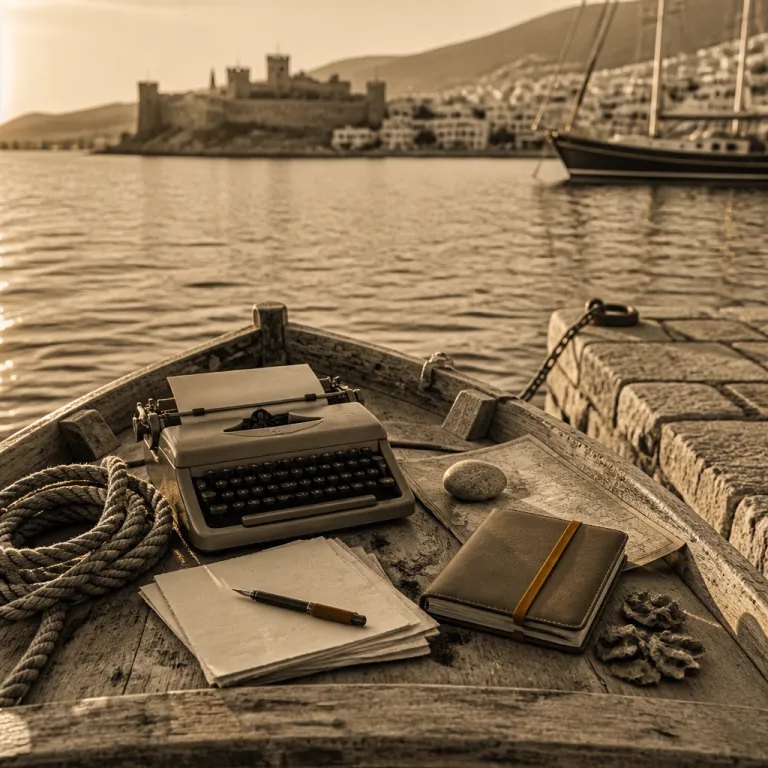
From political exile to literary Bodrum: setting the scene
Bodrum looks effortless today, all whitewashed lanes, gulets and discreet luxury. Yet the Bodrum literary history Cevat Şakir shaped began with punishment, not pleasure, when a young writer was sent in political exile to this remote harbour. His arrival would quietly redirect the town’s life and eventually its place on the map for cultured travelers.
The man later known as the Fisherman of Halicarnassus was born Cevat Şakir, into the powerful Kabaağaçlı family of Ottoman intellectuals. His father Mehmed Şakir Pasha was a diplomat and scholar, while his mother İsmet Hanım came from another respected Turkish family, and this cultivated household moved between İzmir and İstanbul with ease. That privileged beginning makes his later years in Bodrum, living among sponge divers and fishermen, even more striking.
After studying at Robert College and then in Europe, Cevat Şakir returned to İstanbul to write for Resimli Hafta, a popular illustrated magazine. When he published a short story about deserters that challenged official narratives of war, the courts sentenced him to three years of internal exile in Bodrum. Those three years of enforced distance from İstanbul became the foundation of the Bodrum literary history Cevat Şakir would later build, turning exile Bodrum into a lifelong home and creative wellspring.
Walking with the Fisherman of Halicarnassus: places to stay near his world
To understand how Bodrum became a writer’s haven, you need to walk the streets where Cevat Şakir walked. The modest house where cevat sakir once lived sits back from the harbour, close enough to smell the sea yet far from today’s beach clubs, and staying nearby lets you trace his daily routes at dawn. Many luxury hotels now frame views across the same bay that inspired the Fisherman Halicarnassus persona he created as Halikarnas Balıkçısı.
Choose a premium property within a short stroll of the castle and marina if you want to feel this Bodrum literary history Cevat Şakir made tangible. From a shaded terrace you can look towards the Castle of St Peter, built over ancient Halicarnassus, and imagine the writer sketching its outline while local people prepared their nets. For travelers who like their culture with high thread counts, several refined addresses pair sea facing suites with curated libraries of Turkish literature, including works by Sakir Kabaağaçlı and his contemporaries.
If ancient Halikarnas and its layered history fascinate you, consider a stay that aligns with a deeper exploration of the Mausoleum of Halicarnassus and other classical sites. A useful starting point is this guide to luxury stays for cultured travelers near the Halikarnas mausoleum, which helps you match archaeological days with elegant nights. From such bases you can move easily between Cevat Şakir’s Bodrum, the ruins of Halicarnassus, and the contemporary galleries that continue the town’s creative life.
From Halikarnas Balıkçısı to the Blue Voyage: how literature reshaped the Aegean
The pseudonym Halikarnas Balıkçısı, literally the Fisherman of Halicarnassus, was more than a literary flourish. Under this name, the Kabaağaçlı fisherman persona allowed Cevat Şakir to speak as both insider and outsider, championing Bodrum’s people while introducing the town to İstanbul’s elite. His essays and stories about the Aegean sea, the sponge divers and the small harbours of the Aegean region turned a forgotten corner of the coast into a stage for Turkish literature.
Central to the Bodrum literary history Cevat Şakir created is the idea of the Blue Voyage, or mavi sürgün and later mavi yolculuk. What began as a kind of second exile at sea, after his earlier political exile Bodrum, evolved into a celebratory blue cruise along the coves between Bodrum, Gökova and Datça. In these narratives, the kabaagacli fisherman figure sails with artists and writers, anchoring in bays where only tangerine groves and goat bells broke the silence.
Modern gulet operators still trade on this legacy, but the most rewarding itineraries keep faith with the original blue voyage spirit. Choose smaller boats that follow routes mentioned in works like “Aganta Burina Burinata” and “Mavi Sürgün”, and ask skippers about quiet anchorages once used by sponge divers. For a thoughtful overview of how this literary seascape now intersects with rapid development, the analysis on Bodrum’s challenge to protect its heritage while scaling tourism is essential reading before you book.
Reading Bodrum: essential works and how they shape your stay
Arriving in Bodrum with a reading list changes the way you see the peninsula. Start with “Mavi Sürgün”, where Cevat Şakir reflects on his years between İstanbul, İzmir and Bodrum, and you will recognise the same light on the sea when you step onto your hotel balcony. Pair it with “Aganta Burina Burinata”, whose restless sailor hero mirrors the fisherman Halicarnassus archetype that still haunts the harbour at dusk.
These books, along with essays scattered across Resimli Hafta and other periodicals, anchor the Bodrum literary history Cevat Şakir helped define within the broader current of Turkish literature. They also illuminate the complex figure of Sakir Pasha, the father whose strictness and later death shaped the writer’s life, and whose world of Ottoman privilege contrasts sharply with the humble rooms of exile Bodrum. Reading about the Kabaağaçlı family’s salons in İstanbul and İzmir, then returning to your understated luxury suite in Bodrum, underlines how far the writer traveled in both geography and spirit.
Couples planning a romantic stay can weave these texts into their itinerary for a more layered experience. Choose a quiet hotel where you can read on a shaded terrace in the afternoon, then walk down to the marina in the evening, tracing routes once taken by turgut reis statues and by the real sponge divers who inspired Halikarnas Balıkçısı. For those planning a longer escape after other Mediterranean trips, this curated guide to honeymoon hotels in Bodrum when you have already done the Greek islands pairs literary ambience with refined service.
Staying in the shadow of Cevat Şakir: practical guidance for luxury travelers
Choosing where to stay in Bodrum as a literature minded couple is partly about proximity, partly about atmosphere. Properties near the old town and castle place you close to the Cevat Şakir house museum, the harbour where the first blue voyage gulets once moored, and the narrow streets where local people still trade in small shops. From here you can walk easily to the waterfront cafés that echo the fisherman Halicarnassus mood, especially in the quieter months.
Further along the peninsula, resorts in Türkbükü, Yalıkavak or Gümüşlük offer more seclusion while still connecting to the Bodrum literary history Cevat Şakir shaped. Many of these hotels can arrange private blue cruise style day trips that follow classic mavi sürgün routes, with skippers who know the stories of Halikarnas Balıkçısı and the old sponge divers. Ask concierges to arrange guided walks that link the ruins of ancient Halicarnassus, the Mausoleum site and the Cevat Şakir landmarks, so your days move gracefully between archaeology, literature and contemporary Turkish hospitality.
When you read about the young cevat sakir, educated at Robert College and raised under the watchful eye of Mehmed Şakir Pasha and İsmet Hanım, then stand on a Bodrum terrace at sunset, the town’s transformation feels almost improbable. Yet this is precisely what makes the peninsula compelling for thoughtful travelers who value both comfort and context. Booking a luxury stay here means entering a living narrative where family history, political exile, the Aegean sea and the evolution of Turkish literature all converge in one luminous bay.
Tracing the legacy: how Bodrum’s literary past shapes its future stays
The story of Bodrum literary history Cevat Şakir began is still unfolding in the way new hotels frame their relationship with place. Some properties commission local artists whose work nods to Halikarnas Balıkçısı, while others host readings that revisit the years of exile Bodrum and the early blue voyage experiments. When you choose these addresses, you support a hospitality culture that treats history as a living companion rather than a marketing slogan.
Look for hotels that reference both ancient Halikarnas and modern Bodrum in their design language. A lobby mural of the Aegean region, a library corner stocked with Turkish literature, or a bar named after “Aganta Burina Burinata” signals that the management understands the peninsula’s layered identity. Staff who can explain the difference between a standard blue cruise and the more intimate, writerly routes once sailed by the Kabaağaçlı fisherman are another reliable indicator.
As more couples arrive from the United States and beyond, the challenge is to keep Bodrum’s soul intact while welcoming new guests. Thoughtful travelers can play their part by choosing stays that honour the legacy of cevat sakir and Sakir Kabaağaçlı, asking about local initiatives that protect the coastline and supporting small businesses run by families whose life here predates tourism. In doing so, your own years of returning to this peninsula may become another quiet chapter in the long, sea scented narrative that began with one writer, one sentence and one unexpected journey south.
FAQ: literary Bodrum and Cevat Şakir for luxury travelers
Where should I stay in Bodrum to explore Cevat Şakir’s legacy on foot ?
For easy access to Cevat Şakir landmarks, choose a luxury or premium hotel in Bodrum town itself, within about 1 to 2 kilometres of the castle and marina. From this area you can walk to the Cevat Şakir house, the harbour where early blue voyage boats departed and the remains of ancient Halicarnassus. It also keeps you close to restaurants and cafés that echo the atmosphere described by Halikarnas Balıkçısı in his writings.
Can I still experience an authentic Blue Voyage connected to Halikarnas Balıkçısı ?
Yes, but you need to be selective when booking. Look for smaller gulets or yachts that offer routes in the Gulf of Gökova and around the Bodrum peninsula, explicitly referencing the original mavi sürgün and blue voyage traditions rather than party oriented cruises. Ask operators whether guides share stories about Cevat Şakir, the sponge divers and the Aegean region’s history during the trip.
Which books by Cevat Şakir should I read before a Bodrum trip ?
The most relevant works for travelers are “Mavi Sürgün”, which reflects on his exile Bodrum years and early sea journeys, and “Aganta Burina Burinata”, a novel steeped in the life of fishermen and sailors. Both texts illuminate the Bodrum literary history Cevat Şakir helped create and deepen your sense of place when you arrive. If you read Turkish, essays and articles published in magazines like Resimli Hafta add further context.
Are there guided literary tours in Bodrum focused on the Fisherman of Halicarnassus ?
Specialist guides in Bodrum offer private or small group walks that follow routes linked to Halikarnas Balıkçısı. These usually include the Cevat Şakir house, viewpoints over the sea he described, and sometimes short drives to nearby villages that appear in his stories. Many luxury hotels can arrange such tours on request, pairing them with tailored restaurant and blue cruise recommendations.
How can I balance luxury comforts with a more authentic, literary experience of Bodrum ?
Choose a high end hotel that engages with local culture through design, books and partnerships with Bodrum based guides. Plan at least one day in the old town, visiting Cevat Şakir sites and the Halicarnassus ruins, then another day on a quieter blue voyage style cruise. This balance lets you enjoy refined service while staying close to the people, sea and history that shaped Cevat Şakir’s life and work.
References
Turkish Ministry of Culture and Tourism ; Bodrum Museum of Underwater Archaeology ; Bodrum Municipality cultural publications.